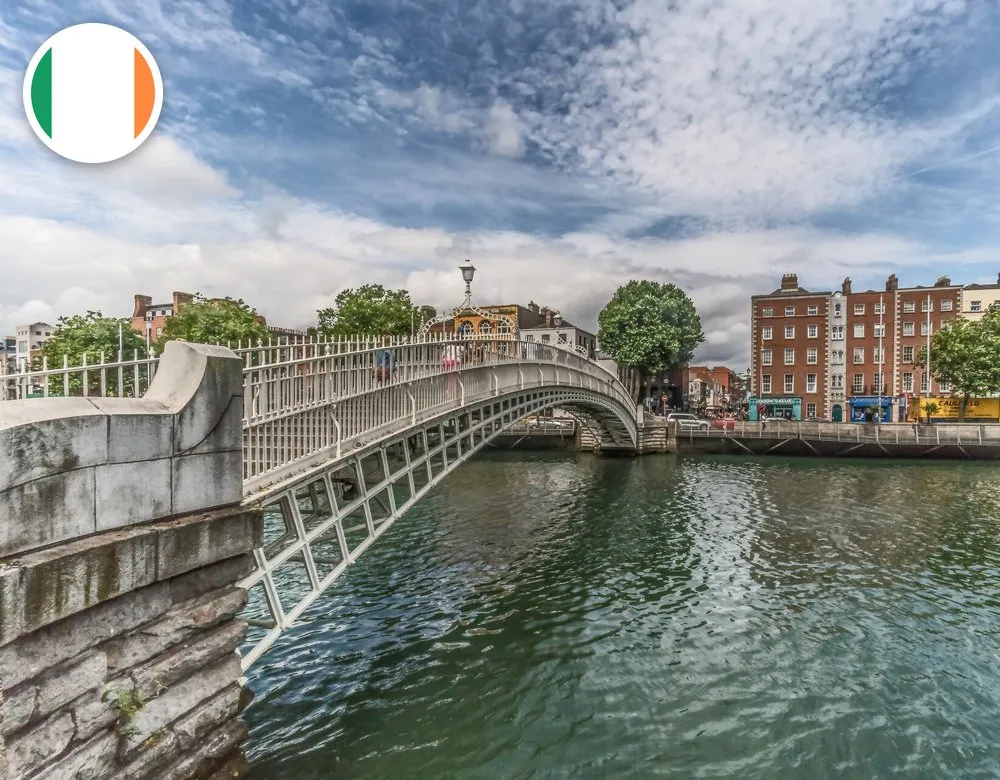
Graduations, family visits and holidays, planned with you
DocumentationComplete, checked document support
Expert visa guidancePersonal advice from experienced counsellors
Interview preparationBe confident. Be prepared.
Appointment helpForms, fees and biometrics, step by step
Let's plan your visit to Ireland
Our visa services
Visitor visa
Student visa
Additional services
Air ticketing
Forex services
Passport assistance
Short stay 'C' visit visa (tourist, or visit family/friend)
Ireland visitor visa guide
Indian citizens need a visa to visit Ireland. For a short trip, this is the short stay 'C' visa, which allows a stay of up to 90 days. You apply online, then give your documents, passport and fingerprints at a VFS centre in India, and the Embassy of Ireland in New Delhi decides.
Visa
Short stay 'C' visa. Choose 'Visit Family/Friend' or 'Tourist' as the reason for travel.
Maximum stay
Up to 90 days. The immigration officer at the airport decides how long you can stay and stamps it in your passport.
Fee (as of October 2026)
₹5,300 single entry, ₹9,000 multiple entry, paid to VFS when you book. VFS service charges are extra. The official fee is €60 single and €100 multiple entry. It is not refunded if the visa is refused or withdrawn.
How Indians apply
Fill in the AVATS form online, then book a VFS appointment. Give your documents, passport and biometrics there. Everyone aged 5 or over gives biometrics, unless exempt.
Processing time
The Embassy in New Delhi lists 6 to 8 weeks for visit visas (update of 17 September 2026). These are working days counted from when the Embassy receives your file, and they are not guaranteed. Add a few days for VFS transit and courier.
1Visitor visa for a graduation ceremony
Ireland has no separate graduation visa. Parents and relatives usually apply for the short stay 'C' visa with 'Visit Family/Friend' as the reason for travel.
Plan early. The Embassy accepts applications up to 3 months before travel and advises applying up to 90 days ahead. You do not need flight bookings to apply. Flights booked before the visa comes are at your own risk.
Your student in Ireland writes the invitation letter. As a non-EU citizen, they must attach a colour copy of their Irish Residence Permit (IRP) and of the immigration stamp in their passport.
Be ready to explain who is paying, where you will stay, your exact dates, and why you will come home. Your answers should match your letters and documents. The Embassy may phone you or your sponsor to check details.
Useful supporting documents: the student's invitation letter with copies of their passport and IRP, any letter or email from the university giving the ceremony date, proof of your relationship (such as the student's birth certificate), your accommodation plan, bank statements for the last 6 months, and proof of your job, business or property in India.
2Visitor visa for an event or family visit
To visit a son, daughter or relative studying in Ireland, choose 'Visit Family/Friend' in AVATS. A conference or event has its own reason for travel, 'Conference/Event'.
Your own application letter must give your reason for the trip, your dates, where you will stay and who is paying. It must list all family members living in Ireland, even ones you will not visit, and any family in other EU/EEA countries or Switzerland. It must also include your promise to obey the visa conditions, not to use public services, and to leave on time.
The invitation letter must be signed and dated. It must state why they are inviting you, the dates they will see you, and how they know you. It must include a colour copy of the picture page of their passport or ID card. It must also say they understand you must obey the visa conditions, not rely on public services, and leave before your permission ends.
If you will stay in their home, the letter must say so and give the dates and their full address with Eircode. If they will help pay, the letter must give a cost estimate in euro, and they must send proof they can afford it, such as bank statements, 3 recent payslips, a tax document and an employer letter.
This visa does not allow any work, paid or unpaid. It does not allow you to use publicly funded services, such as a public hospital.
Useful supporting documents: the invitation letter (one per household you visit), the host's passport and IRP copies, proof the host lives at that address (such as a recent utility bill), proof of your relationship, and the host's financial documents if they are paying.
3Visitor visa for tourism
For a holiday, choose 'Tourist' as the reason for travel. Each traveller needs their own visa. Ireland does not issue family visas or e-visas.
The New Delhi checklist asks tourists for a hotel booking showing the length of stay and whether it is paid, a travel itinerary, an application letter, and evidence that you will return home.
Travel or medical insurance is only needed once the visa is approved. You must carry it when you arrive and show it if asked.
Useful supporting documents: hotel reservations with dates and the hotel's contact details, a day-by-day plan, your application letter, bank statements for the last 6 months, and proof of your job, studies, business or property in India.
4Applying again
Each application is judged on its own. Send a full set of documents every time.
Multiple-entry visas are approved in limited cases only. They usually go to people who have had 2 earlier Irish visas and kept to their conditions.
Since 1 June 2026 there is no appeal against a short stay visa refusal. If you are refused, you can make a new application on AVATS. Read the refusal letter carefully and deal with each reason it gives.
You must declare every past visa refusal for any country and include the original refusal letter. Not declaring a refusal will lead to a refusal. False or misleading documents can lead to a ban of up to 5 years.
Useful supporting documents: copies of all old passports, any earlier Irish visas, and original refusal letters from any country.
How the application process works
Fill in the AVATS form
Complete the online application on AVATS. Answer every question fully and honestly. Note your Visa Application Transaction Number.
Print and sign the summary sheet
AVATS produces an application summary sheet. Print it, sign it and date it. It goes in with your documents.
Pay the fee and book VFS
Book an appointment at your nearest VFS Ireland centre and pay the visa fee to VFS when you book. VFS service charges are extra.
Submit documents, passport and biometrics
Attend in person. Hand over your documents and passport, and give your fingerprints and photograph. VFS scans your original documents and returns them. Your passport goes to the Embassy unless you choose the optional VFS service to keep it while you wait.
Wait for the decision
The Embassy in New Delhi decides applications in date order. It publishes a list of decisions each day, which you can search by your reference number. It does not give individual status updates at busy times.
Receive your passport
Your passport comes back through VFS Delhi and is sent by Blue Dart, usually within two working days. Check the dates, number of entries and duration of stay on the visa straight away.
Documents to keep ready
Application documents
Signed and dated AVATS summary sheet. Passport valid for at least 6 months after you leave Ireland, with 2 empty visa pages, plus copies of all old passports. Two recent colour photos on a white background, signed on the back with your transaction number written on. Your signed application letter. The invitation letter if visiting family or friends. All documents in English, or with translations by an official translation company.
Financial evidence
Original bank statements for the last 6 months, on bank letterhead or certified by the bank. A written explanation of any large deposits or withdrawals. An employment letter and salary certificate dated within 4 weeks before you apply. A cost estimate and the sponsor's own financial documents if someone else is paying.
Reasons to return
If employed, 3 recent payslips and an employer letter giving how long you have worked there, your leave dates and your return date. If a student, a letter from your college. If self-employed, business details and recent accounts or tax returns. Birth certificates of children staying at home. Property title deeds or a tenancy agreement.
Ireland sets no minimum amount for a visit visa. The visa officer decides whether you have enough for your trip based on your own circumstances. Show steady savings and income over 6 months, and explain any large or sudden deposits.
Before you travel
A visa lets you travel to Ireland. It does not guarantee entry. The immigration officer at the airport decides whether you can enter and how long you can stay, up to 90 days.
Carry your passport, visa, travel or medical insurance, and copies of the documents from your application.
You must not work, paid or unpaid, or use public services such as a public hospital.
Leave before the date on your landing stamp. Ireland does not give exit stamps. Extensions are granted only in rare, unforeseen circumstances, never for more tourism.
Ireland is not part of Schengen. A Schengen visa is not valid for travel to Ireland.
An ordinary Irish visa does not let you enter the UK, including Northern Ireland. Under the British-Irish Visa Scheme, Indian nationals living in India may get a visa endorsed 'BIVS', which covers short stays in both Ireland and the UK. You must enter the country that issued the visa first. The visa officer decides whether to add the endorsement.
Under the Short Stay Visa Waiver Programme, Indian nationals who have first entered the UK as visitors on an eligible UK visitor visa may travel on to Ireland without an Irish visa, within their UK permission and for no more than 90 days. A UK ETA does not count.
Golden Globe Overseas Education can help you understand the process, organise documents and prepare for the interview. Visa decisions are made by the immigration authorities of Ireland.