

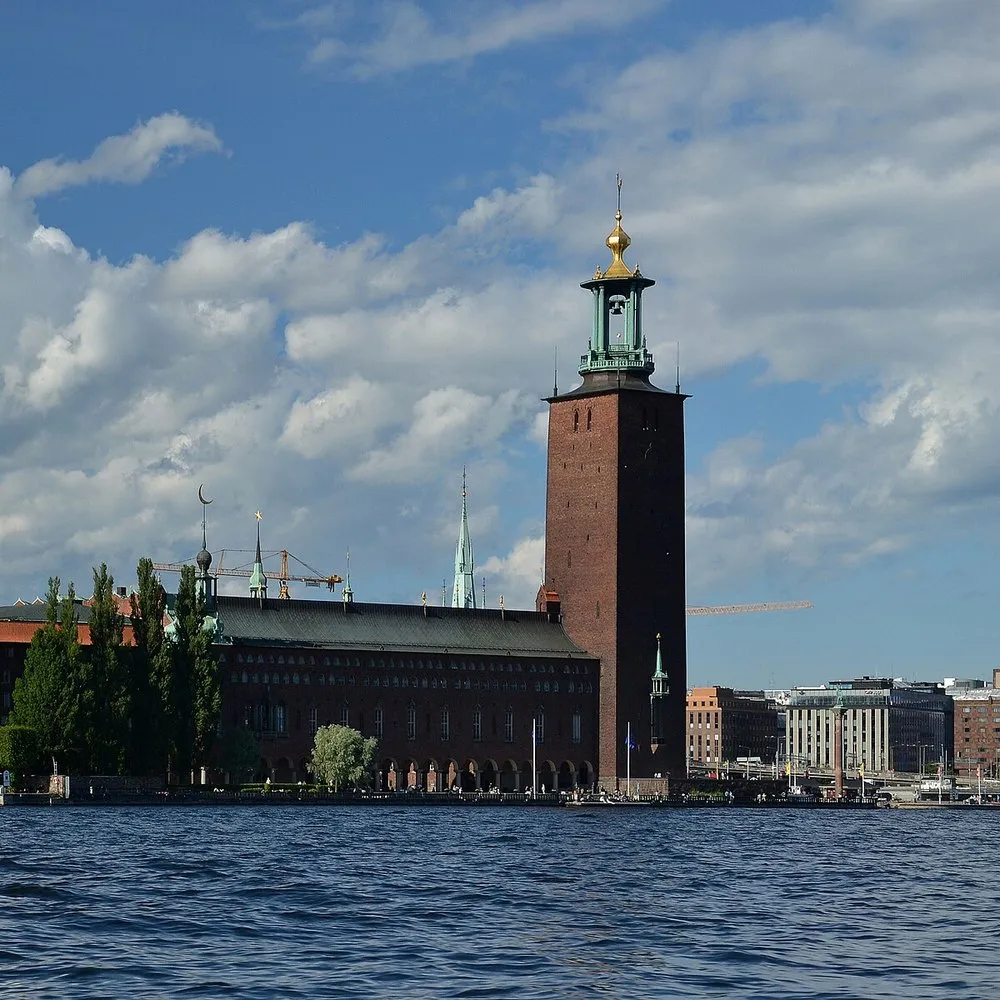

Why study in Sweden?
Teaching in English
Sweden offers thousands of programmes taught entirely in English, at bachelor’s, master’s and doctoral level, and you can study almost any subject without speaking Swedish. The main exceptions are programmes that lead to a regulated profession in Sweden, such as becoming a doctor, nurse, dentist, vet or teacher, which are taught in Swedish.
A different way of learning
Swedish classrooms are informal: students call lecturers by their first names and are expected to question ideas in discussion seminars. Much of your time goes on group projects, reading and assignments, and courses are often taken one at a time, each ending with an exam.
Work rights during and after your studies
You can work part time alongside your studies, and after completing your degree you can apply for a residence permit to look for work in Sweden for up to one year (see below). Sweden is looking for graduates in science, technology, engineering and IT in particular, in sectors such as energy, IT and advanced manufacturing.
As of October 2026 — sources: Study in Sweden – degree programmes, higher education in Sweden, after your studies.
The Swedish education system
Swedish higher education is offered by universities (universitet) and university colleges (högskolor). Both teach at bachelor’s and master’s level. Universities can award doctoral degrees in any field, while university colleges need permission from the Swedish Higher Education Authority (UKÄ) to award doctoral degrees in a specific field. For a master’s student, the difference matters less than the programme itself, so compare programmes, not just institution types.
Studies are organised in three cycles:
| Level | Typical length | Credits |
|---|---|---|
| Bachelor’s degree (first cycle, kandidatexamen) | 3 years | 180 credits |
| One-year master’s (second cycle) | 1 year | 60 credits |
| Two-year master’s (second cycle) | 2 years | 120 credits |
| Professional qualifications (for example engineering) | Often 5 years | Varies |
| Doctorate (third cycle) | Applied for directly with the university | — |
A normal full-time workload is 30 credits per semester, or 60 credits per academic year. Swedish credits are compatible with the European Credit Transfer and Accumulation System (ECTS), which helps your degree to be recognised in other European countries. Both one- and two-year master’s programmes end with a master’s thesis; a two-year programme simply covers more material.
The autumn semester runs from late August to mid-January and the spring semester from January to early June. Most programmes start in the autumn.
As of October 2026 — sources: Universityadmissions.se – the Swedish higher education system, Study in Sweden – degree programmes, Eurydice – types of higher education institutions in Sweden.
Popular universities
- KTH Royal Institute of Technology, Stockholm
- Chalmers University of Technology, Gothenburg
- Lund University, Lund
- Uppsala University, Uppsala
- Stockholm University, Stockholm
- University of Gothenburg, Gothenburg
- Linköping University, Linköping
- Umeå University, Umeå
- Luleå University of Technology, Luleå
- Jönköping University, Jönköping
- Malmö University, Malmö
- Blekinge Institute of Technology, Karlskrona
Entry requirements
Master’s programmes
Most master’s programmes are applied for through one central portal, Universityadmissions.se. You can apply to several programmes in one admissions round and rank them in order of preference. International students are advised to apply in the first admissions round, because the second round leaves too little time for a residence permit.
Key dates for autumn 2027 (first admissions round):
| Step | Date |
|---|---|
| Application opens | 16 October 2026 |
| Application deadline | 15 January 2027 |
| Application fee and supporting documents deadline | 1 February 2027 |
| Master’s admission results | 1 April 2027 |
Application fee: students from outside the EU/EEA and Switzerland pay SEK 900 – one fee per semester, however many programmes you apply for. Pay it early: University Admissions does not review your application until the fee is paid, and a late payment makes your application late.
Academic requirements for Indian degrees: University Admissions asks for at least a three-year bachelor’s degree with honours, a four-year bachelor’s degree, or a bachelor’s degree followed by a master’s degree (four years of study in total). Some Indian degrees in traditional medicine systems, such as BAMS, BUMS, BSMS and BHMS, do not qualify. Each programme also has specific requirements, for example in maths or a particular subject area.
Documents for Indian applicants:
- Degree certificates issued by your university (registrar or examinations office). Upload the provisional certificate issued by the university; diplomas issued by a college are not accepted.
- Transcripts for every semester. Mark sheets issued by a college are not accepted unless the college is autonomous.
- Proof of English proficiency, and proof that you meet the programme’s specific requirements.
- A copy of your passport’s personal data page.
All documents must be stamped and signed by an authorised person. Documents signed or verified through DigiLocker are not accepted. Your name and date of birth must match on every document and in your account – affidavits are not accepted to explain differences, so sort out any spelling issues early. If you are in the final year of your bachelor’s degree, you can still apply and document your final-year status. Indian documents are normally in English, so no translation is needed.
Bachelor’s programmes
For bachelor’s programmes, Indian students apply with their Class 12 results, such as the Higher Secondary Certificate, ISC or CBSE certificates, plus any specific requirements of the programme. The same rule applies: certificates must be stamped and signed, and DigiLocker copies are not accepted. Admission results for autumn 2027 bachelor’s programmes are published on 8 April 2027.
Rules as of October 2026 — sources: Universityadmissions.se – India, master’s admission, India, bachelor’s admission, autumn semester dates, pay your application fee.
English requirements
Most bachelor’s and master’s programmes require “English 6”, the level of English from a Swedish upper secondary school. Some master’s programmes ask for English 5 or English 7, so check each programme. Accepted tests and the minimum scores for English 6 include:
| Test | Minimum for English 6 |
|---|---|
| IELTS Academic (including IELTS Online and IELTS UKVI Academic) | Overall 6.5, no section below 5.5 |
| TOEFL iBT (results from 21 January 2026) | Total 4.5 on the 1–6 scale, no section below 4 |
| TOEFL iBT (earlier results) | Total 90, with at least 20 in writing |
| PTE Academic | 62 overall, 61 in writing |
| Cambridge C1 Advanced | Overall score of at least 180 |
IELTS General Training is not accepted. For PTE, you must send your score to “University Admissions in Sweden” in your PTE account.
Indian applicants may also meet the requirement through their school results: English as a graded subject in Class 12 with at least three other subjects taught in English (the certificate must state English as the language of instruction), or English grades in the CISCE Class XII certificate or the CBSE Senior School Certificate from 2008 onwards. This route does not apply to polytechnic diplomas. A letter from your college or university saying you studied in English is not enough on its own.
Rules as of October 2026 — sources: Universityadmissions.se – English language requirements, India, master’s admission.
Scholarships
Swedish Institute (SI) Scholarship for Global Professionals. This government scholarship covers full tuition, a monthly allowance of SEK 12,000 and a travel grant for master’s students with work and leadership experience from selected countries. India is not one of the 34 eligible countries for 2026/27. The Swedish Institute says information on the 2027/28 round will be published on its website on 19 October 2026, so check the country list before you plan around it.
University scholarships and tuition reductions. Most Swedish universities offer their own scholarships for fee-paying international students, usually for master’s programmes starting in the autumn. You apply directly to the university, so check each university’s scholarship page and deadline. Most of these scholarships go towards tuition fees rather than living costs, and they are competitive. There are no scholarships through University Admissions for bachelor’s studies or for programmes that start in the spring semester.
As of October 2026 — sources: Swedish Institute – SI Scholarship for Global Professionals, Universityadmissions.se – scholarships, Study in Sweden – scholarships.
Education and living costs
As an Indian student you pay tuition fees, which each university sets for each programme. Typical ranges per academic year:
| Expense | Approximate cost |
|---|---|
| Application fee (Universityadmissions.se) | SEK 900 per semester |
| Tuition – average | about SEK 160,000 a year |
| Tuition – social sciences and humanities | about SEK 80,000 to SEK 135,000 a year |
| Tuition – technical and natural sciences | about SEK 140,000 to SEK 185,000 a year |
| Tuition – architecture and design | about SEK 210,000 to SEK 320,000 a year |
| Living costs | about SEK 10,656 a month |
| Residence permit fee | SEK 1,500 |
Study in Sweden’s sample monthly budget of SEK 10,656 includes about SEK 4,900 for accommodation and SEK 2,716 for food, plus local travel, phone and other costs. Housing is usually the largest cost, and it varies a lot by city. Textbooks can add about SEK 750 a month.
Migrationsverket maintenance requirement: for the residence permit you must show at least SEK 10,656 a month (for applications made in 2026) for the whole period of your permit, on top of your paid tuition fee. Partners and children add to this amount.
Figures as of October 2026 — sources: Study in Sweden – fees and costs, Migrationsverket – higher education.
Working while you study and after graduation
While you study. New rules from 11 June 2026 ended unlimited working hours for students. Bachelor’s and master’s students with a residence permit granted on or after that date may work up to 15 hours a week during semesters. There is no limit in June, July and August, and work that is part of your education – such as traineeships, research or student representation at your university – is not counted. Once you have completed at least two semesters of higher education, you may work more for the rest of your permit. Working more than allowed can lead to your permit being withdrawn.
Study progress. To extend your permit, full-time students must now show at least 37.5 credits in the first year and 45 credits a year from the second year onwards.
After you graduate. If you have completed a programme of at least two semesters and passed all your courses, you can apply for a residence permit to look for work or explore starting a business for up to one year after a bachelor’s or master’s degree. You must apply before your study permit expires, show enough money for the whole period and pay the SEK 1,500 fee. Since June 2026 it is generally harder to switch from a study permit to another permit, such as a work permit, from within Sweden unless you have completed a programme of at least two semesters.
Rules as of October 2026 — sources: Migrationsverket – new rules for studies in higher education, look for work after your studies, Study in Sweden – new rules.
Residence permit for studies
Indian students need a residence permit to study in Sweden for more than three months. Apply as soon as you have your admission result and have paid your first tuition instalment – you are only finally admitted, and can only be granted a permit, once that payment is made. Your university then notifies the Migration Agency.
How to apply
- Apply online on the Swedish Migration Agency’s website. You need to be 18 or over, have an email address, a Visa or Mastercard and scans of your documents.
- Pay the fee: SEK 1,500 for adults (SEK 750 for children). It is not refunded if your application is rejected.
- Show your funds: at least SEK 10,656 a month for the whole permit period, in a bank account in your own name that you can access. Relatives cannot act as sponsors, so parents should transfer the money to you. The bank statement must be issued no more than four months before your permit should start. A scholarship or education loan certificate can be used instead if it states the amount, period and payment dates.
- Passport check: most applicants get an email to check their passport digitally in an app. If you are asked to present your passport in person or to give fingerprints and a photo, you book an appointment with the Embassy of Sweden in New Delhi by emailing its migration section. The Consulate General in Mumbai does not handle study permits.
- Wait for the decision: as of October 2026, 75% of recent cases were decided within three months, and priority processing is not available – so apply early for an August start.
Insurance
If your programme lasts less than one year, you must have comprehensive health insurance for your whole stay (covering emergency and other medical care, hospital stays, emergency dental care and transport home), unless your university provides it. If your studies last at least one year, you register in the Swedish population register instead and get access to Swedish healthcare.
Permit length and new rules
A permit is granted for up to one or two years at a time depending on your university, never for longer than your studies or your passport’s validity. From 11 June 2026 you must also report your address in Sweden to the Migration Agency within 30 days unless you are registered in the population register, and the new work-hour and study-progress rules above apply.
Rules as of October 2026 — sources: Migrationsverket – higher education, new rules for studies in higher education, Embassy of Sweden in New Delhi – contact, Universityadmissions.se – residence permit for studies.
 USA
USA UK
UK Ireland
 Canada
 Australia
 New Zealand
 Germany
 France
 Switzerland
 Finland
 Denmark
 Singapore
 Dubai
Dubai