



Why study in Ireland?
English-speaking, in the European Union
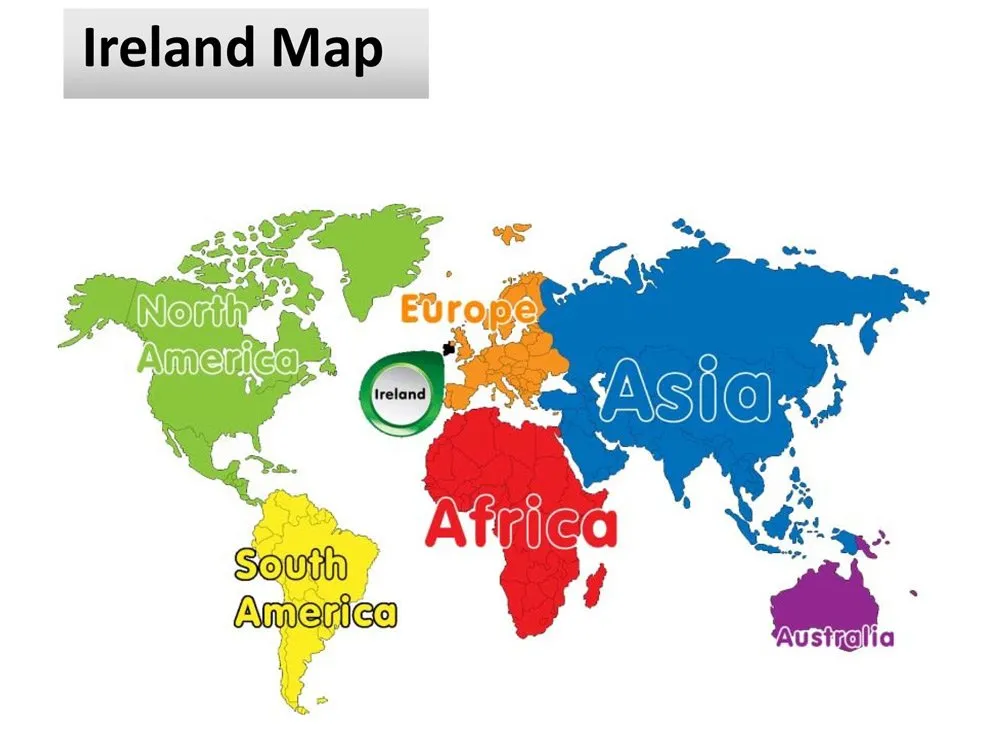
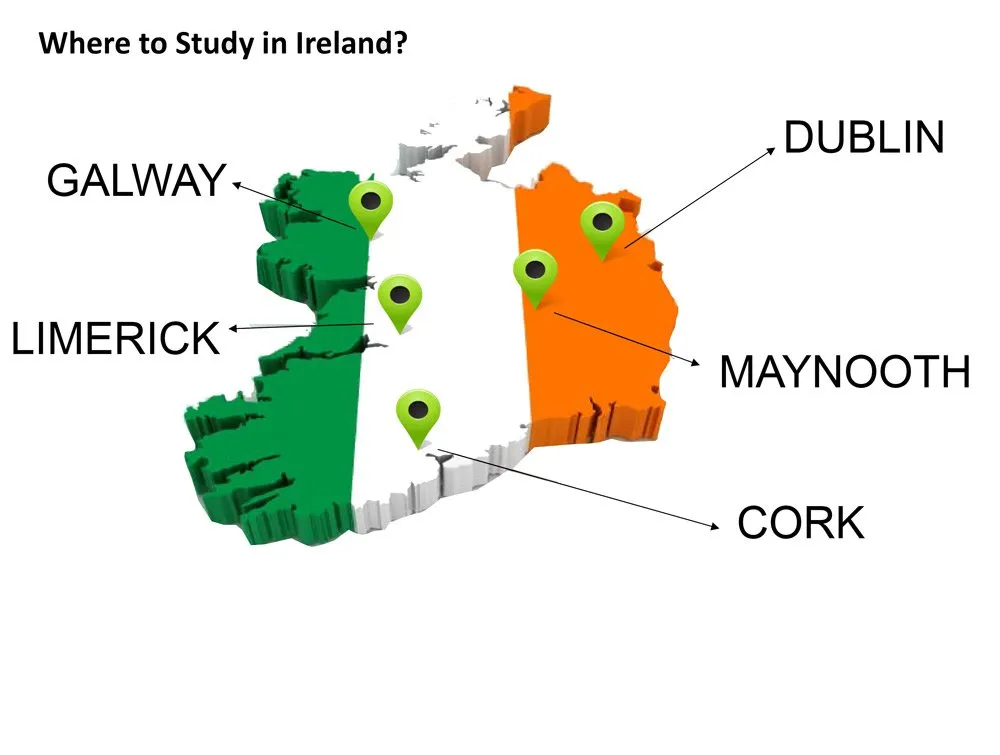
Ireland is a member of the European Union where teaching is in English. Its capital is Dublin, and other student cities include Cork, Galway, Limerick and Maynooth. The currency is the euro.
One-year Master’s programmes
Many taught Master’s degrees in Ireland take one year of full-time study, which keeps both fees and living costs to a single academic year.
Time to look for work after graduation
Graduates can stay on under the Third Level Graduate Programme (Stamp 1G) to look for graduate jobs and apply for an employment permit (see “Working while you study and after graduation” below).
The Irish education system
Universities and technological universities
Ireland has 12 publicly funded universities:
- 7 universities: Trinity College Dublin, University College Dublin, University College Cork, University of Galway, Maynooth University, University of Limerick and Dublin City University
- 5 technological universities: Technological University Dublin, Munster Technological University, Technological University of the Shannon: Midlands Midwest, Atlantic Technological University and South East Technological University
Most of the former institutes of technology merged to form the technological universities, whose programmes tend to be career-focused. Two publicly funded institutes of technology remain: Dundalk Institute of Technology and Dún Laoghaire Institute of Art, Design and Technology. Other publicly funded colleges include the National College of Ireland, the National College of Art and Design and RCSI University of Medicine and Health Sciences, and there are also private colleges offering degrees.
NFQ levels
All recognised qualifications sit on Ireland’s 10-level National Framework of Qualifications (NFQ), managed by Quality and Qualifications Ireland (QQI). Higher education awards run from level 6 to level 10:
| NFQ level | Main higher education awards |
|---|---|
| 6 | Higher Certificate |
| 7 | Ordinary Bachelor Degree |
| 8 | Honours Bachelor Degree, Higher Diploma |
| 9 | Master’s Degree, Postgraduate Diploma |
| 10 | Doctoral Degree |
The level matters for your stay-back: a level 8 award gives 12 months of Stamp 1G, and a level 9 award up to 24 months.
Choosing an eligible course
To study in Ireland for more than 90 days you must choose a full-time course from an official list of eligible programmes. As of October 2026, Irish immigration asks students to check both the TrustEd Ireland providers’ eligible programmes list and the older Interim List of Eligible Programmes (ILEP), because a programme will not appear on both. TrustEd Ireland is a statutory quality mark run by QQI; the first 28 higher education institutions were authorised in January 2026, including all 12 public universities. The ILEP has been closed to new programmes since mid-2025 and will stop operating once the second TrustEd Ireland cycle is complete, after which only TrustEd-authorised providers can recruit students who need a study visa. Part-time and online courses do not qualify.
As of October 2026 — sources: gov.ie – publicly funded higher education institutions, QQI – National Framework of Qualifications, Irish Immigration – eligible courses, QQI – first 28 TrustEd Ireland institutions, QQI – TrustEd Ireland for higher education providers.
Popular universities and colleges
| Institution | Type | Location |
|---|---|---|
| Trinity College Dublin | University (public) | Dublin city centre |
| University College Dublin | University (public) | Dublin |
| Dublin City University | University (public) | North Dublin |
| University College Cork | University (public) | Cork |
| University of Galway | University (public) | Galway, west coast |
| University of Limerick | University (public) | Limerick, mid-west |
| Maynooth University | University (public) | Maynooth, Co. Kildare |
| Technological University Dublin | Technological university (public) | Dublin |
| Munster Technological University | Technological university (public) | Cork and Kerry |
| Atlantic Technological University | Technological university (public) | West and north-west, including Galway and Letterkenny |
| South East Technological University | Technological university (public) | South-east, including Waterford and Carlow |
| Technological University of the Shannon | Technological university (public) | Midlands and mid-west, including Athlone and Limerick |
| Dundalk Institute of Technology | Institute of technology (public) | Dundalk, between Dublin and Belfast |
| National College of Ireland | College (publicly funded) | Dublin |
| Shannon College of Hotel Management | College, part of the University of Galway | Shannon, Co. Clare |
| Dublin Business School | Private college | Dublin |
| Griffith College | Private college | Dublin and Cork |
| CCT College Dublin | Private college | Dublin |
Popular subjects for Indian Master’s students include computer science, data analytics, engineering, business and management. Course lists change every year, so check each programme on the institution’s website and on the eligible programmes lists.
Entry requirements
Each university sets its own admission rules, so always read the programme page. You apply directly to the university or college.
Master’s studies
- A relevant Bachelor’s degree, usually at least second-class honours (2:2 or 2:1, depending on the course) or the equivalent. Universities publish their own equivalents for Indian degrees, and QQI offers qualification recognition advice if you are unsure.
- Official transcripts (semester marksheets) and your degree or provisional certificate
- A statement of purpose explaining your study plans and career goals
- A CV and academic or professional references
- Proof of English (see below)
- For some courses, such as an MBA, several years of work experience and sometimes a GMAT score
Whether a three-year Indian degree is accepted for a particular Master’s programme is decided by the university, so check this before you apply.
Bachelor’s studies
Admission is based on your Class 12 results, with subject and grade requirements set by each university and programme. Some institutions offer foundation programmes, linked to a conditional offer of an Honours Bachelor’s degree, for students who do not yet meet the academic requirements.
As of October 2026 — sources: Irish Immigration – eligible courses and foundation programmes, QQI.
English requirements
Your university sets its own minimum English score, which is usually higher than the immigration minimum. For the visa, Irish immigration sets these minimums for degree-level courses:
| Test | Immigration minimum for degree courses |
|---|---|
| IELTS Academic (or IELTS UKVI) | 5.0 |
| TOEFL iBT (including Home Edition) | 61 |
| PTE Academic | 30 |
| Duolingo English Test | 75 |
| LanguageCert Academic | 60 |
| Cambridge English | Pass in First, Advanced or Proficiency |
Submit the test provider’s certificate with your visa application. It must be issued within 2 years of your course start date. These are visa minimums only – you still need the score your programme asks for.
As of October 2026 — source: Irish Immigration – English language requirements for study visas.
Scholarships
- Government of Ireland International Education Scholarship (GOI-IES) – run by the Higher Education Authority (HEA), it offers 60 scholarships a year to students from outside the EU/EEA, Switzerland and the UK, including India. Each gives a €10,000 stipend and a full tuition fee waiver for one year of full-time study at Master’s, Postgraduate Diploma or PhD level (NFQ level 9 or 10) at an eligible Irish institution. You need a conditional or final offer of admission to apply. The 2026 call closed on 12 March 2026; as of October 2026 the HEA has not yet published the 2027 call, so watch its website.
- University scholarships – many universities and colleges offer their own scholarships or fee reductions for international students. Check each institution’s scholarships page.
As of October 2026 — source: Higher Education Authority – GOI-IES.
Education and living costs
Tuition fees
International students from India pay tuition fees; the Free Fees Initiative covers only eligible EU/EEA, Swiss and UK students. Postgraduate fees for non-EU students in 2025/26 are about:
| Subject area | Tuition fees (per year, about) |
|---|---|
| Business | €14,000 – €40,000 |
| Engineering | €15,000 – €30,000 |
| Science and technology | €15,000 – €31,000 |
| Arts and humanities | €12,000 – €23,000 |
| Medicine and health sciences | €11,000 – €30,000 |
Fees change each year, so confirm the fee for your course with the institution. Colleges cannot accept fees in cash, and they must tell you about all fees and charges – such as exam fees and medical insurance – before you enrol.
Living costs and proof of funds
Irish immigration estimates the cost of living for a student at €10,000 for one academic year, and this is the amount you must show for the visa:
- Immediate access to at least €10,000 in the first year, in addition to your fees
- For a longer course, access to €10,000 plus fees for each later year
- Bank statements on headed paper covering the last six months, for you and for each sponsor, with any large or irregular deposits explained; credit cards are not accepted
- Degree students can instead lodge an education bond of at least €10,000 with an approved student fee payment service
Your actual costs depend on your city and accommodation, so budget for your own situation – rent in Dublin is usually higher than elsewhere.
Figures as of October 2026 — sources: Education in Ireland – postgraduate tuition fees, HEA – Free Fees Initiative, Irish Immigration – information on student finances, Irish Immigration – student FAQs.
Working while you study and after graduation
While you study
- On a Stamp 2 student permission you may work up to 20 hours a week during term.
- You may work up to 40 hours a week in June, July, August and September, and from 15 December to 15 January.
- Work placements or internships that are an integral, credit-bearing part of a course at NFQ level 7 or above may go beyond 20 hours a week; the placement cannot exceed half the length of the course.
- You must show you can support yourself without relying on casual work.
- The national minimum wage for workers aged 20 and over has been €14.15 an hour since 1 January 2026.
After you graduate: Stamp 1G
Under the Third Level Graduate Programme, graduates with an award from a recognised Irish awarding body can stay to look for graduate-level work and apply for an employment permit:
- Level 8 (Honours Bachelor’s): 12 months
- Level 9 or above (Master’s): 12 months at first, renewable for a further 12 months if you show you are actively looking for graduate work
On Stamp 1G you can work 40 hours a week without an employment permit. You must apply within six months of being told you have achieved your award, while you still hold Stamp 2 and a valid IRP card, and register before you leave Ireland. Registration costs €300. Your total time as a student and on Stamp 1G cannot exceed seven years (eight years for level 9 graduates). Once you get an employment permit, you move to Stamp 1.
Rules as of October 2026 — sources: Irish Immigration – planning to study in Ireland, student FAQs, Third Level Graduate Programme, Embassy of Ireland, New Delhi – visas, National Minimum Wage Order 2025.
Student visa and IRP registration
Indian students need a long-stay “D” study visa for a course longer than three months. You can apply up to 3 months before you travel.
How to apply
- Apply online on AVATS (the Automated Visa Application and Tracking System). Answer every question fully, then print, sign and date the summary application form.
- Pay the visa fee. For applicants in India it is ₹5,300 for a single-entry visa or ₹9,000 for multiple entry, paid to VFS when you book your appointment; VFS service charges are extra. The fee is not refunded if the visa is refused or withdrawn.
- Submit your documents and biometrics in person at a VFS Global centre in India. The Embassy of Ireland, New Delhi decides your application and returns your passport through VFS.
- Wait for the decision. As of September 2026 the Embassy gives 4 to 8 weeks for study visas, counted in working days from when it receives your application – not including VFS appointment or courier time. Status updates are not given, and decisions are published in a daily list. Do not book flights before you have your visa.
Typical documents
- Signed AVATS summary form and two recent passport photographs
- Passport valid for at least 12 months after your arrival, plus copies of all previous passports
- Letter of acceptance for a full-time course with at least 15 hours of daytime tuition a week, stating the fees payable and paid
- Proof of fee payment (in full if under €6,000; at least €6,000 if higher)
- Evidence of funds – €10,000 for living costs plus a summary of finances form
- Private medical insurance
- English test certificate and your academic qualifications
- Application letter explaining your plans, your commitment to obey the visa conditions, and any gaps in your education
- Details of any previous visa refusal by any country, with the original refusal letter – not disclosing one leads to refusal
If your visa is refused, you can appeal within 2 months of the date on your refusal letter, free of charge.
Registering your permission (IRP)
A D visa lets you enter Ireland; you then register your Stamp 2 permission within 90 days of arrival. Book a first-time appointment online after you arrive – Immigration Service Delivery’s Registration Office is at Burgh Quay, Dublin. At the appointment your documents are checked, your photograph and fingerprints are taken, and you pay the €300 registration fee by card. Bring your passport, college letter, proof of fees and private medical insurance that includes hospital cover. Your Irish Residence Permit (IRP) card arrives by post, usually within 10 working days.
Beware of agents who promise guaranteed visas: applicants resident in India must give biometrics in person at VFS, and Ireland does not issue e-visas.
Process as of October 2026 — sources: Irish Immigration – long-term study visa, visa fees, Embassy of Ireland, New Delhi – visas, processing times, Irish Immigration – registering for the first time, required documents and fees.
 USA
USA UK
UK Canada
 Australia
 New Zealand
 Germany
 France
 Switzerland
 Sweden
 Finland
 Denmark
 Singapore
 Dubai
Dubai