

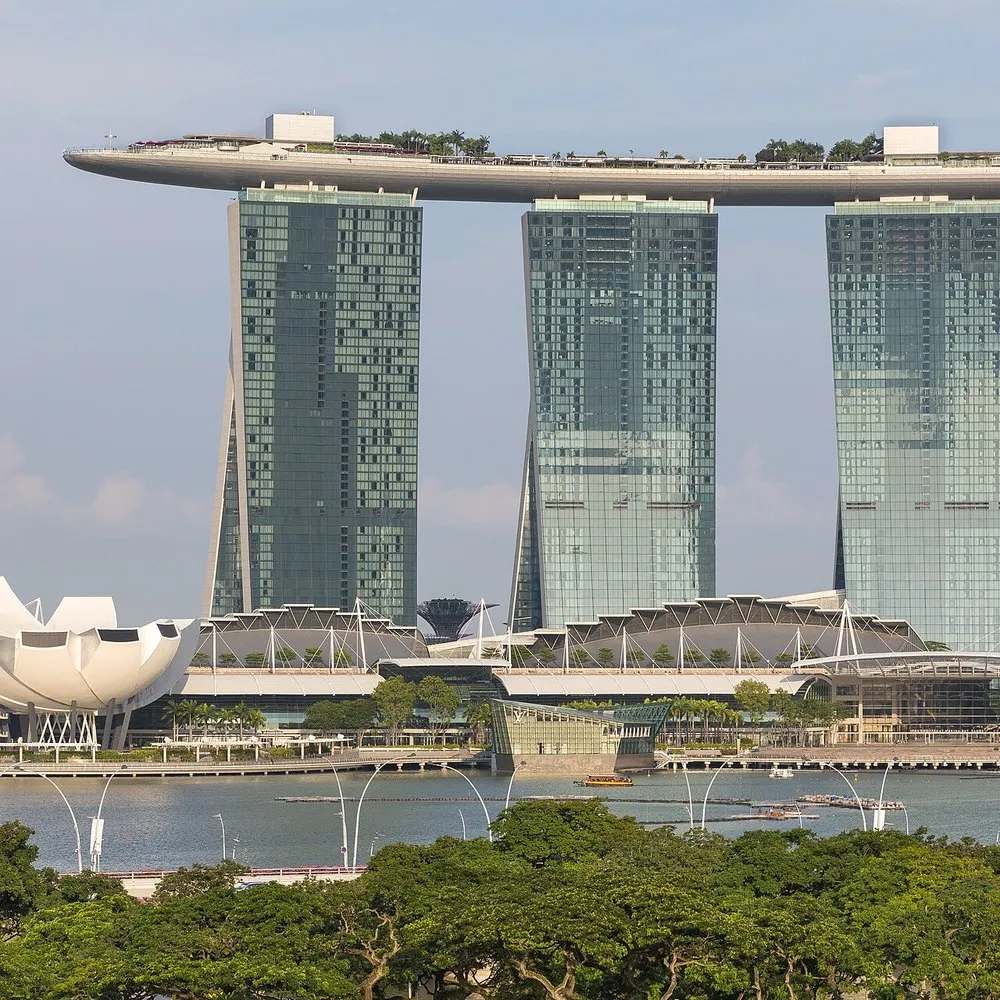

Why study in Singapore?
English-medium study close to home
English is the main language of teaching at Singapore’s universities, so you study in the language you already use for your degree in India. Singapore is also close to India, which makes travel home easier for you and your family.
Shorter Master’s programmes
Many coursework Master’s programmes in Singapore take one to two years of full-time study. A shorter programme can lower the total cost of your degree and get you into work sooner – but check the exact duration of each programme, because it varies.
A clear choice of institutions
The six autonomous universities include research-intensive universities such as NUS and NTU and applied-learning universities such as SIT, whose programmes include a work-study component. Many programmes include projects or internships.
Work opportunities during and after your studies
As a full-time student at an eligible institution, you may work up to 16 hours a week during term without a work pass, and full time during vacations. After you graduate, you can look for a job and apply for a work pass – see the section on work below.
The education system
Singapore’s higher education sector has three main parts.
| Type of institution | What they offer |
|---|---|
| Autonomous universities (6) | Bachelor’s, Master’s and doctoral degrees |
| Polytechnics (5) | Diplomas, mostly practice-oriented |
| Private education institutions (PEIs) | Certificates, diplomas and degrees, some awarded by overseas universities |
Autonomous universities
The six autonomous universities are the National University of Singapore (NUS), Nanyang Technological University (NTU), Singapore Management University (SMU), Singapore University of Technology and Design (SUTD), Singapore Institute of Technology (SIT) and Singapore University of Social Sciences (SUSS). They are publicly funded but run themselves, and they set their own admissions criteria.
Polytechnics
The five polytechnics are Nanyang, Ngee Ann, Republic, Singapore and Temasek Polytechnics. They offer practical diploma courses, mostly for school leavers.
Private education institutions and EduTrust
Private education institutions (PEIs) must be registered under the Private Education Act, which is administered through the Committee for Private Education (CPE). EduTrust is a quality certification for PEIs that looks at a school’s management, academic processes, student protection and financial health – it does not assess course content.
This matters for you as an Indian student: only EduTrust-certified PEIs can offer places to foreign students, and a PEI that is not EduTrust-certified cannot sponsor you for a Student’s Pass. On 1 July 2026 SkillsFuture Singapore merged with Workforce Singapore to form the Skills and Workforce Development Agency (SWDA), which now publishes the private education resources. Always check a PEI’s registration and EduTrust status before you apply or pay.
Rules as of October 2026 — sources: MOE – autonomous universities, ICA – Student’s Pass for Institutes of Higher Learning, ICA – approved private education institutions, SkillsFuture – about EduTrust, SWDA launch.
Popular universities
- National University of Singapore (NUS)
- Nanyang Technological University (NTU)
- Singapore Management University (SMU)
- Singapore University of Technology and Design (SUTD)
- Singapore Institute of Technology (SIT)
- Singapore University of Social Sciences (SUSS)
Some overseas institutions also run campuses in Singapore, such as INSEAD, ESSEC, SP Jain, DigiPen and TUM Asia (German Institute of Science and Technology).
Entry requirements
Master’s degrees
Most Master’s programmes ask for a good bachelor’s degree – NTU, for example, asks for “at least a good Bachelor degree” – and some also ask for relevant work experience. Many Indian applicants apply with a four-year degree such as a BTech or BE; if you hold a three-year degree, check the programme page carefully or ask the admissions office whether you are eligible.
You usually apply online directly to the university and submit:
- your degree certificate and transcripts (final-year students can often apply with results to date);
- English test scores (see below);
- GRE or GMAT scores, if the programme asks for them;
- a statement of purpose, CV and references; and
- the application fee, which is non-refundable.
At NTU, most coursework Master’s programmes have one intake a year, in August, with applications typically opening in September or October and closing between late January and the end of March. Some programmes also have a January intake. Some schools, such as Nanyang Business School, run their own application process and deadlines.
Bachelor’s degrees
The universities accept Indian Class 12 results, with separate requirements for CBSE, ISC and state boards. NUS, for example, does not ask for JEE scores for the Indian Standard 12 route. Check each university’s undergraduate admissions page for current grades and deadlines.
Requirements as of October 2026 — sources: NTU – coursework programmes admission guide, NUS – Indian Standard 12 (CBSE and ISC).
English requirements
If English is not your native language, most programmes ask for an IELTS Academic or TOEFL iBT score. At NTU, minimum IELTS scores for coursework Master’s programmes range from about 6.0 to 7.0 overall, and some programmes also set a minimum for each skill. Test scores must be dated within two years of your application.
TOEFL iBT moved to a new 1–6 scoring scale for tests taken on or after 21 January 2026; NTU accepts scores on either the old 0–120 scale or the new scale. Applicants without an English test may still apply to NTU, but the school may ask for an interview or test. Requirements differ by programme, so always check the programme page.
Requirements as of October 2026 — source: NTU – coursework programmes admission guide.
Scholarships and the MOE Tuition Grant
MOE Tuition Grant
The Ministry of Education (MOE) Tuition Grant reduces the fees for selected full-time diploma and undergraduate courses at the polytechnics, the autonomous universities and some other institutions. International students who accept it sign a Tuition Grant Agreement and must:
- work full time for a Singapore entity for three years after graduation, starting immediately after graduation (the three years can be spread across employers);
- update MOE on their employment within three months of graduating; and
- nominate two sureties, who are jointly liable to pay damages if the bond is not served.
Work for a Singapore entity overseas is possible in some cases, with MOE’s prior approval. MOE’s Tuition Grant page covers diploma and undergraduate courses only, so for a Master’s plan your budget on the university’s full published fee.
Scholarships
Scholarships for international students in Singapore are mostly offered by the universities and individual schools, usually on merit. Awards for coursework Master’s programmes are limited, and most cover only part of the fees. Research degrees (MPhil and PhD) have more funding options. Check the scholarships page of each university and programme.
Rules as of October 2026 — sources: MOE – Tuition Grant Scheme, MOE – Tuition Grant bond matters.
Education and living costs
Tuition depends on the university and the programme. As an example, total tuition for coursework MSc programmes at NTU starting in 2026-27:
| Programme (NTU) | Total tuition, including 9% GST |
|---|---|
| MSc Applied Economics | about S$45,450 |
| MSc Aviation, Project Management or Supply Chain Engineering | about S$53,560 |
| MSc Robotics & Intelligent Systems | about S$56,680 |
| MSc Artificial Intelligence, Cyber Security or Data Science | about S$63,220 |
Fees at other universities and schools differ, fees can change each year, and miscellaneous fees are billed separately. Always check the fee page of your programme.
NTU estimates monthly living costs for a graduate student at about S$1,300 to S$1,600:
| Expense | Approximate cost per month |
|---|---|
| On-campus graduate housing | about S$400 to S$600 |
| Meals | about S$450 to S$630 |
| Personal expenses | about S$230 to S$330 |
| Transport within Singapore | about S$150 to S$250 |
| Phone plan | from about S$50 |
Allow about S$200 to S$500 a year for textbooks and course material.
Figures as of October 2026 — sources: NTU – MAE MSc tuition fees, NTU – CCDS MSc programmes, NTU – MSc Applied Economics fees, NTU EEE – living costs for international students.
Working while you study and after graduation
During your studies
If you are a full-time student at an eligible institution on the Ministry of Manpower (MOM) list and hold a Student’s Pass, you can work without a work pass:
- during term, for up to 16 hours a week, or on an internship or industrial attachment run by your institution that counts towards your graduation; and
- during vacations, without an hours limit, and without notifying MOM.
Exchange students are not allowed to work. The list of eligible institutions is set by MOM, so check that your institution is on it.
After you graduate
Graduates of the universities, polytechnics and certain other listed institutions can apply to ICA for a Long-Term Visit Pass (LTVP) to stay in Singapore while they look for work. The application fee is S$45, plus S$60 on issue, and applications are processed within about six weeks. The LTVP does not by itself let you work: your employer must apply to MOM for a work pass.
For graduate jobs, the main pass is the Employment Pass (EP). It has two stages:
- Minimum qualifying salary. For new applications made before 1 January 2027, the minimum is S$5,600 a month (S$6,200 in financial services), rising with age. For new applications from 1 January 2027, it rises to S$6,000 (S$6,600 in financial services).
- COMPASS. The application must also score at least 40 points under the Complementarity Assessment Framework (COMPASS), which scores salary, qualifications, workforce diversity and the employer’s support for local employment, with bonus points for some shortage occupations and strategic priorities. Jobs paying at least S$22,500 a month are exempt.
If you studied on the MOE Tuition Grant, remember your three-year work bond (see above).
Rules as of October 2026 — sources: MOM – work pass exemption for foreign students, ICA – LTVP for graduates seeking employment, MOM – Employment Pass eligibility.
Student’s Pass
If you are accepted for full-time study at a university, polytechnic or EduTrust-certified PEI, you need a Student’s Pass from the Immigration & Checkpoints Authority (ICA). Part-time, evening and weekend courses do not qualify. As an Indian national you also need a visa to enter Singapore; for students, a single-journey visa is included in the In-Principle Approval (IPA) letter.
How to apply
- Registration by your institution. After you accept your offer, your institution registers your details in ICA’s online Student’s Pass system (SOLAR) and gives you a Registration Acknowledgement and login details.
- Online application. Complete the Student’s Pass application form (eForm 16) online at least two months and not more than three months before your course starts. You do not need to be in Singapore. Upload a recent passport-sized digital colour photo (taken within the last three months), your passport biodata page and the other details requested.
- Processing fee. Pay the non-refundable S$45 processing fee online – at NTU, within seven days of submitting, or the application is withdrawn.
- Decision. ICA usually processes applications for the universities and polytechnics within one week, or two weeks if a visa is required. For PEIs, it takes up to one month (two weeks for an EduTrust-certified PEI). If approved, you receive an IPA letter. The IPA letter is not an immigration pass in itself.
- Medical examination. If your IPA letter asks for it, a registered doctor completes ICA’s Medical Examination Report, including an HIV test and a chest X-ray. You can have it done in India. ICA accepts the report only within three months of its issue.
- Completion of formalities. After you arrive in Singapore, book an appointment through ICA’s e-Service (walk-ins are not accepted), pay the S$60 issuance fee (plus S$30 for a multiple-journey visa, if applicable), and attend the ICA Services Centre – or an on-site enrolment arranged by your institution – to give your biometrics. Bring all the documents listed in your IPA letter.
Your digital Student’s Pass
Since 27 February 2023 the Student’s Pass has been digital – no physical card is issued. After formalities you receive an email, and you can download the pass from FileSG or MyICA, or view it in the Singpass app after about three working days.
Process as of October 2026 — sources: ICA – apply for a Student’s Pass, ICA – Institutes of Higher Learning, ICA – completion of formalities, ICA – visa requirements, ICA – Medical Examination Report, NTU – application of Student’s Pass.
 USA
USA UK
UK Ireland
 Canada
 Australia
 New Zealand
 Germany
 France
 Switzerland
 Sweden
 Finland
 Denmark
 Dubai
Dubai