

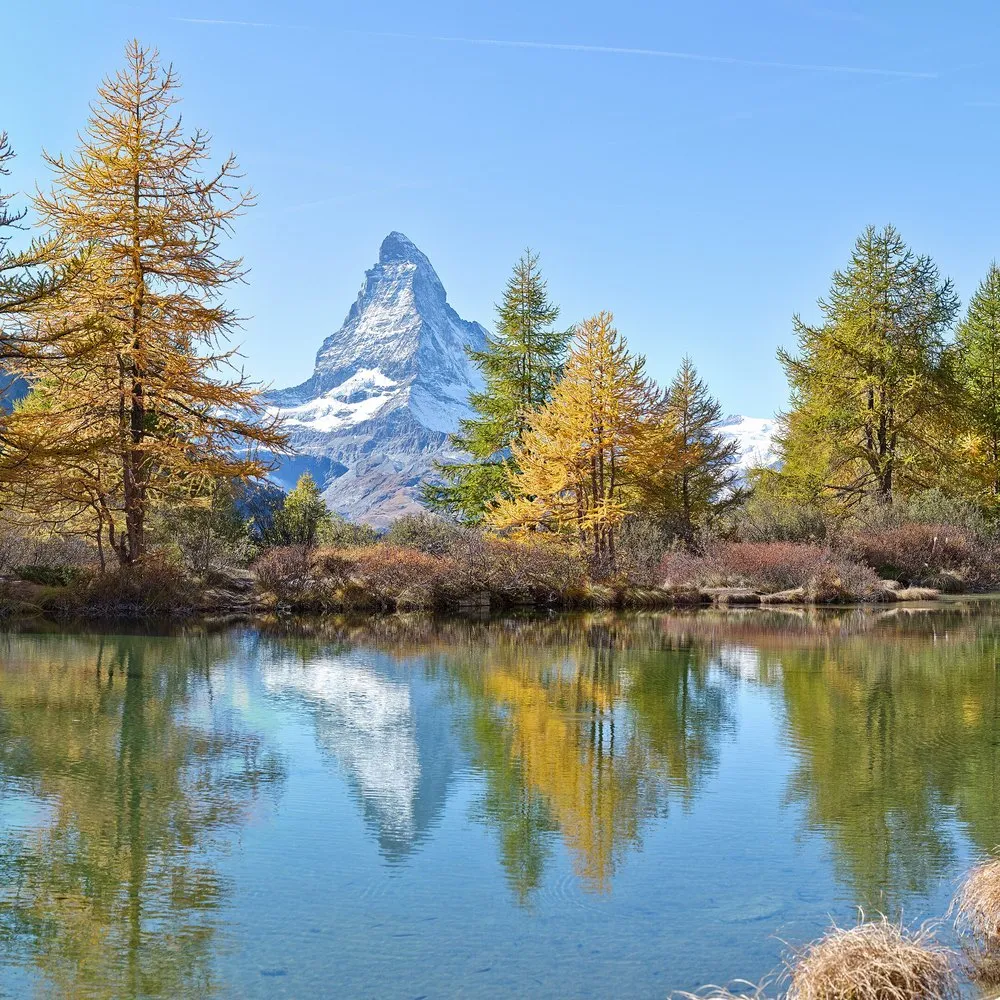

Why study in Switzerland?
Quality of teaching and research
Switzerland has a strong tradition of research and innovation. Its two federal institutes of technology, ETH Zurich and EPFL, and its cantonal universities are well known for research in science, engineering, economics and many other fields. Universities of applied sciences add practical, industry-linked programmes.
Programmes in English
Switzerland has four national languages, and universities teach in German, French or Italian, depending on the region. At Master’s and PhD level, however, a large share of programmes are taught in English. At ETH Zurich, for example, most Master’s programmes are taught in English.
Modest tuition at public universities
Tuition at public institutions is about CHF 500 to 4,000 a semester, depending on the institution. This is low compared with many other popular study destinations, although living costs in Switzerland are high, so you need to plan your budget carefully.
Work during and after your studies
Students from outside the EU/EFTA can work up to 15 hours a week during term, starting six months after their studies begin. Graduates of Swiss universities can stay for up to six months to look for a job.
Facts as of October 2026 — sources: study in switzerland+ – tuition languages, cost of living, working while studying, ETH Zurich on study+.
The Swiss education system
Swiss higher education has three types of institution:
| Type | What it offers |
|---|---|
| Universities (12) | Theory-based teaching and basic research: 10 cantonal universities run by the cantons, plus ETH Zurich and EPFL, the two federal institutes of technology |
| Universities of applied sciences and arts (9) | Professional, practice-oriented degrees, applied research and cooperation with industry |
| Universities of teacher education (20) | Practice-oriented training for teachers |
ETH Zurich and EPFL belong to the ETH Domain, which also includes four federal research institutes (PSI, WSL, Empa and Eawag).
Degrees and ECTS credits
Switzerland follows the Bologna system used across Europe, with Bachelor’s, Master’s and doctoral degrees measured in ECTS credits. One credit stands for about 25 to 30 hours of work, and a full-time year is 60 credits.
| Qualification | Credits | Typical duration |
|---|---|---|
| Bachelor’s degree | 180 ECTS | 3 years, full time |
| Master’s degree | 90 or 120 ECTS | 1.5 to 2 years, full time |
| Doctorate (PhD) | Research-based | Usually several years of research |
Facts as of October 2026 — sources: study in switzerland+ – university types, programme duration and ECTS, SERI – Swiss Government Excellence Scholarships.
Popular universities
- ETH Zurich, Zurich
- EPFL (École polytechnique fédérale de Lausanne), Lausanne
- University of Zurich, Zurich
- University of Geneva, Geneva
- University of Basel, Basel
- University of Bern, Bern
- University of Lausanne, Lausanne
- University of St. Gallen (HSG), St. Gallen
- Università della Svizzera italiana (USI), Lugano
- Universities of applied sciences such as ZHAW, FHNW and HES-SO
Entry requirements
Master’s degree
For a Master’s, you need a recognised Bachelor’s degree in a related subject. Swiss universities decide admission themselves, programme by programme, so requirements differ widely. Many programmes look closely at your grades and the subjects in your Bachelor’s, and some ask for GRE or GMAT scores, a CV, a statement of purpose and letters of recommendation. Check the admission page of each programme.
Bachelor’s degree
Admission to a Bachelor’s is harder for Indian students. The Class 12 certificates swissuniversities recognises include the Higher Secondary School Certificate, the All India Senior School Certificate, the Indian School Certificate and the Intermediate Examination Certificate, issued by an official examination board and with the required spread of subjects. Even so, for the 2026/27 academic year:
- most cantonal universities (for example Basel, Bern, Geneva, Lausanne and Zurich) ask for a university degree of at least three years;
- ETH Zurich asks for your school certificate, a certificate of university admission in your subject from a recognised Indian university and a reduced entrance examination, or otherwise its comprehensive entrance examination; and
- EPFL asks for your school certificate plus its entrance examination.
Rules as of October 2026 — source: swissuniversities – admission requirements by country (India).
Language requirements
Every programme needs good knowledge of its language of instruction:
- English-taught programmes – IELTS, TOEFL or another test the university accepts. The Swiss Embassy in India also lists an English certificate such as TOEFL or IELTS as mandatory for the student visa.
- German-, French- or Italian-taught programmes – proof of that language at the level the university sets. Most Bachelor’s programmes are taught in a national language, and medicine is taught only in German or French.
Many universities offer language courses to enrolled international students, and learning some of the local language helps with daily life and part-time jobs.
Rules as of October 2026 — sources: study in switzerland+ – tuition languages, swissuniversities – applying to medical school, Embassy of Switzerland in India – student visa checklist.
Scholarships
Swiss Government Excellence Scholarships
The Swiss government’s scholarships are mainly for early-career researchers who have already completed a Master’s degree. For Indian applicants in the 2027–28 round, the scholarship types on offer are the Research Fellowship and the PhD scholarship. The application window opened on 20 August 2026 and closes on 10 November 2026 (11:59 pm Swiss time), and the Embassy of Switzerland in New Delhi handles applications. Research scholarships pay CHF 2,450 a month, and you need a supervisor at a Swiss university who supports your research plan. These scholarships do not fund taught Master’s degrees for Indian applicants. Applying is free; never pay anyone who asks for money for a “scholarship”.
University scholarships
Grants for Bachelor’s and Master’s students are rare and competitive. Some universities offer merit scholarships for Master’s students, for example the ETH Zurich Excellence Scholarship and Opportunity Programme and the EPFL Excellence Fellowships. Criteria, amounts and deadlines differ, so check each university’s scholarship page early – deadlines are often the same as, or earlier than, the admission deadline.
Programmes as of October 2026 — sources: SERI – Swiss Government Excellence Scholarships, list of countries 2027–28, study in switzerland+ – scholarships.
Education and living costs
Tuition
Tuition at Swiss public institutions is about CHF 500 to 4,000 a semester. Some universities charge higher fees to students who come from abroad: since autumn 2025, ETH Zurich and EPFL charge foreign students who move to Switzerland to study CHF 2,190 a semester (three times the standard CHF 730), plus small semester fees. Always check the fee page of your chosen university.
Living costs
A typical student budget is about CHF 1,850 a month, or about CHF 22,200 a year:
| Expense | Approximate cost per month |
|---|---|
| Accommodation | CHF 700 |
| Food | CHF 600 |
| Health insurance | CHF 90 |
| Transport | CHF 60 |
| Other costs (books, phone, personal) | the rest of the budget |
Costs vary by region, so check the estimate your university gives for its city.
Proof of funds
You must show that you can pay for your studies and living costs. The amount is set by the canton where you will live. For example, the Canton of Zurich asks students from outside the EU/EFTA to show CHF 21,000 a year. For the visa, the Swiss Embassy in India asks for a sponsor’s letter explaining the source of funds and the relationship to the student, the sponsor’s ITR-V for the last two assessment years and bank statements for the last three months.
Figures as of October 2026 — sources: study in switzerland+ – cost of living, ETH Zurich – tuition fees, EPFL – tuition fee and other fees, ETH Zurich – immigration with a visa.
Working while you study and after graduation
During your studies
As an Indian (non-EU/EFTA) student, you can work:
- up to 15 hours a week during the semester;
- up to full time during semester breaks; and
- only from six months after the start of your studies.
Your employer must apply for permission before you start, and the work must be reported to the migration authorities. Do not count on part-time work to pay your fees or to meet the proof-of-funds requirement.
After graduation
If you graduate from a Swiss university, you can usually get a residence permit for up to six months after finishing your studies to look for a suitable job. The six months count from your graduation and cannot be extended, and you can work up to 15 hours a week during this time. You must still show enough money to support yourself. If you find a job, your employer applies for your work permit.
Rules as of October 2026 — sources: study in switzerland+ – working while studying, Federal Act on Foreign Nationals and Integration, Art. 21, EPFL – post-graduation stay, ETH Zurich – job-seeking permit.
Student visa
To study in Switzerland for more than 90 days, you need a national (D) visa. You cannot study on a tourist visa, and a tourist visa cannot be converted into a residence permit later. Apply only after you have your admission letter, and at least three months before you plan to travel.
How to apply from India
- Book an appointment through VFS Global. The embassy lists VFS centres across India, including Hyderabad, Chennai and Bengaluru, while its student checklist says student applications are submitted in person at the Embassy’s Visa Section in New Delhi – confirm the current submission point when you book.
- Submit your application: three signed application forms, plus one original and two sets of copies of your documents.
- Wait for the cantonal decision. The migration office of the canton where you will study decides your application. Processing takes about 8 to 12 weeks and can vary a lot by canton.
- Collect your visa once the canton approves it, and travel to Switzerland.
- Register and get your residence permit. Register with the residents’ office where you live (within 14 days of arrival in Zurich, for example). Students usually receive a B permit, normally valid for one year and renewed each year while you study.
Documents (main items on the embassy’s student checklist)
- Valid passport, issued within the last 10 years, valid for at least three months after your planned return and with two blank pages
- Four passport photos and three completed, signed visa application forms
- A signed cover letter explaining why you want to study in Switzerland, your future plans, and confirming that you will leave Switzerland after your studies
- CV
- Admission letter from the university, and proof of payment of fees, if applicable
- Class 10, Class 12 and university certificates, and an English language certificate (TOEFL or IELTS)
- Financial documents: sponsor’s letter, sponsor’s ITR-V for the last two assessment years and three months of bank statements
The canton may ask for more documents. Applications are often refused if you already hold a degree at the level you want to study, so explain clearly how the new programme fits your career plans.
Fees
Visa fees are not refunded if the application is refused or withdrawn. The embassy’s student checklist lists the visa as free of charge for students, with EUR 90 charged in special cases such as post-doctoral applications; its fee table from 1 April 2026 lists the adult visa fee as EUR 90 (₹9,600). VFS may charge a separate service fee, and in Switzerland you pay cantonal fees for the residence permit – about CHF 144 for the permit plus about CHF 40 for registration in Zurich. Confirm the fee that applies to you when you book.
Health insurance
Health insurance is compulsory in Switzerland. Students from outside the EU/EFTA can ask the cantonal authority for an exemption if they have private insurance that gives cover equivalent to a Swiss health insurer; the exemption lasts three years and can be extended for another three. Otherwise, you must take out Swiss health insurance – usually within three months of arrival.
Process as of October 2026 — sources: Embassy of Switzerland in India – visa, entry and residence, documents for a national visa, student visa checklist, national visa fees, study in switzerland+ – visas and permits, ETH Zurich – residence permit, FOPH – health insurance for foreign students, requirement to obtain insurance.
 USA
USA UK
UK Ireland
 Canada
 Australia
 New Zealand
 Germany
 France
 Sweden
 Finland
 Denmark
 Singapore
 Dubai
Dubai